

Last updated: May 2026
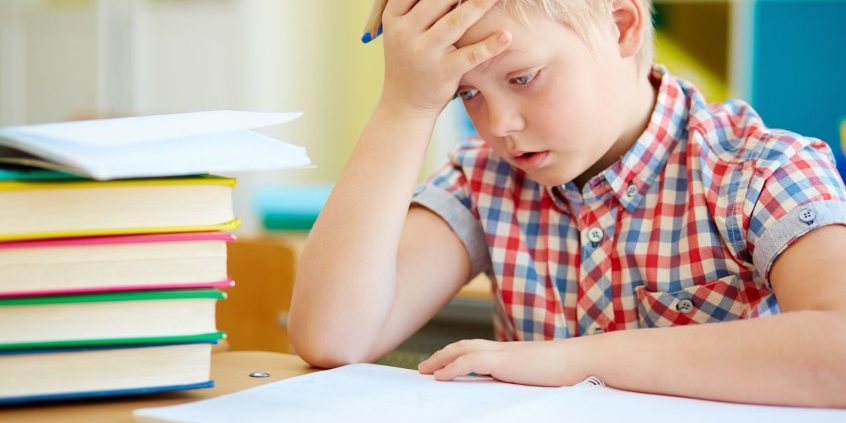
This blog describes common signs your child might display if they are struggling at school, so you can know what to look for and be able to recognise and begin working through a potential issue more easily.
Children are notoriously good at masking problems, particularly when they are embarrassed, scared, or don’t want others to know what they’re having difficulty with. For this reason, it can sometimes be tricky to spot when your child is struggling at school until the issue reaches a tipping point. The earlier you recognise a change or altered behaviour pattern, the sooner you can find out what has prompted it and the faster it can be rectified.
Key Points About Recognising School Struggles:
- When your child starts to struggle at school, whether it be with their work, friends or an extra-curricular activity, it’s imperative to provide support by getting them the help they need as soon as possible.
- Particularly if your child is struggling academically, the longer the issue is left, the worse it gets, as the curriculum is designed for subject content and concepts to build upon previous learning.
- Signs can look like becoming shy and less talkative, seeming bored with school or having a negative attitude towards it, and acting out.
- Parents can often tell a child is struggling when their grades drop or they’re taking much longer to complete homework.
- Hope Tutoring provides one-on-one education for students in Brisbane and remotely.
How Do You Recognise the Signs of a Child Struggling with School?
What are the Signs Your Child is Struggling at School?
Refusing to Discuss School
If you notice that all of a sudden, your child is reluctant to discuss school, or changes the subject to avoid talking about school, this can be a sign of a problem. Children naturally don’t like to discuss things that make them feel bad, or things they’re embarrassed about, which is unfortunately a common response to struggling at school.
If they are only having trouble in a specific area, that subject might become off-limits for discussion, so watch out for avoidance of particular topics too.
Increased Anxiety, Especially Surrounding School
Increased anxiety about school can also indicate that something is not right. This can present in a multitude of ways, such as not wanting to go to school or school refusal, pretending to be sick to stay home, crying or meltdowns before school, difficulty getting ready in the morning or delaying going to school.
Increased separation anxiety, not wanting to leave a parent or being more clingy, can also be a sign of school anxiety, as can school-based nightmares or difficulty eating and sleeping. Increased anxiety at school can indicate that your child is struggling with classroom expectations, their peers, friendships or the content/ workload.
Complaining of Being Bored at School
A child complaining about being bored at school is usually interpreted by adults as stemming from being ‘too far ahead’ of their peers, and hence not being challenged by their classwork, resulting in boredom. However it is far more commonly a sign that your child is struggling academically.
Boredom can be a coping mechanism for children who don’t understand the work they are doing, and is an excuse often used for why they haven’t done their work. It is also caused when a child is too far behind to comprehend enough of the material or lesson to concentrate, so they become completely disengaged.
It’s always important to discover the source of the boredom. The first step is recognising that it might be an indication that your child is struggling at school.
Sudden Change in Their Attitude Towards School
If your child’s attitude towards school suddenly shifts, particularly in a negative way, such as being angry, frightened, stressed or distant about school, it is a sure sign they are having a hard time. When a child who previously enjoyed school no longer wants to be there, it is a clear indicator that they are struggling, whether that be academically, behaviourally or socially.
‘Misbehaving’ at School
Behaviour at school can also be an indication of a child struggling academically, as when children are having difficulty understanding classwork, they feel vulnerable, and are therefore in a more heightened state, making them more likely to lash out or ‘misbehave’. Situations like this must be approached with compassion and understanding, and it is vital that the child is not scolded or disciplined for ‘being naughty’. This behaviour is the only way they are able to communicate that they are not coping. The good news here is that once the root of the issue is identified and a plan is put in place to help, behaviour changes usually resolve quickly.
What are the External Signs of Your Child Struggling at School?
Your child might be struggling at school if:
A) They can’t complete their Homework, or it takes them an excessive amount of time to do so
Not being able to do their homework, or spending an excessive amount of time on homework is a warning sign that your child is struggling academically at school. In primary school, excluding reading, children usually have about 10 minutes of homework per grade level each week, and it should always be comprised of tasks that are at an appropriate level to be completed independently.
B) Their grades drop
This is a bit of an obvious point, but is sometimes overlooked by parents. They may believe their child is simply lacking in motivation or not understanding the importance of their education yet. A pattern of low grades indicates that your child is struggling at school and needs help.
Talk to Justin at Hope Tutoring
Remember, you know your child best, so if you think there’s something more going on, you are most likely correct. It’s always better to be proactive than reactive – so even if your child isn’t struggling yet, there’s never any harm in setting them up for success by giving them extra supports such as tutoring.
Hope Tutoring learning support tutor builds confidence and capability to ensure your child is thriving in their education. If you are looking for remote or Brisbane tutoring contact us today.
Frequently Asked Questions
Communicate collaboratively by scheduling a dedicated meeting and approach the teacher as a teammate focused on solutions, using specific observations from home to help them connect the dots.
It directly impacts a student’s ability to focus, regulate their behaviour, and build resilience when facing difficult tasks. Nurturing a child’s emotional health is just as important as their physical health for effective learning.
To get your child back on track, start by scheduling a meeting with their teacher to pinpoint the problem areas. Rule out underlying issues by visiting your GP for vision or hearing checks, and consider exploring external guidance resources like tutoring.
Yes. Learning Disorders are neurodevelopmental differences that cause children to process information differently. These lifelong challenges are not linked to a child’s intelligence, but significantly impact a student’s performance in specific academic areas.